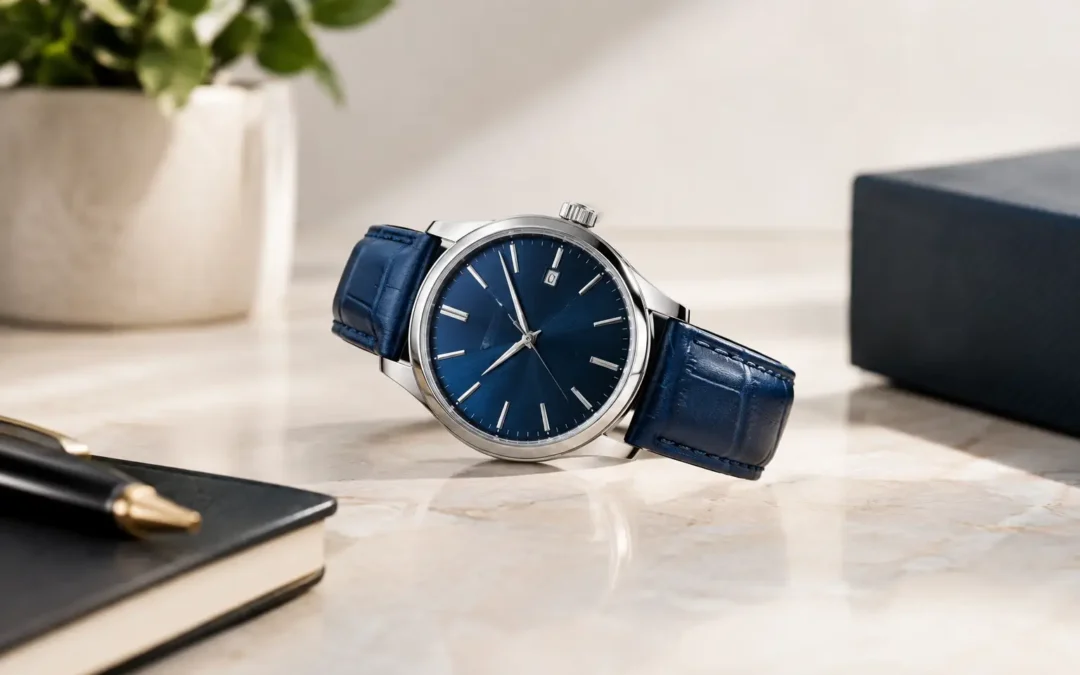
A watch can occupy only a few inches on a product page, yet buyers expect to inspect it like it is already on their wrist. Watch photography for ecommerce has to make polished steel look clean rather than gray, a sapphire crystal look clear rather than black, and a dial remain readable without flattening the design. When those details are missed, even a well-made watch can look low value online.
For ecommerce brands, marketplace sellers, and retailers, watch images are not decorative assets. They are sales tools. The right image set answers the buyer’s practical questions, supports a premium price point, and gives the listing a consistent visual standard across your website, Amazon storefront, catalog, and advertising.
Why Watch Photography for Ecommerce Requires Precision
Watches combine several difficult surfaces in one compact product: polished metal, brushed metal, reflective crystal, dark dials, small type, luminous markers, textured leather, and sometimes gemstones. Each surface reacts to light differently. A lighting setup that makes a brushed stainless-steel case look dimensional can create distracting highlights on the crystal. A setup that shows the face clearly may hide the shape of the bracelet.
That is why quick snapshots and general product photography often fall short. The camera can capture reflections from the room, the lens, or even the photographer. Dust becomes visible at high resolution. Minor alignment issues make a watch face look tilted, while inaccurate color can make gold plating, leather straps, and colored dials appear different from the product a customer receives.
Professional watch photography controls these variables before and after the shutter is pressed. Careful positioning, diffused lighting, controlled reflections, focus stacking when needed, and detailed retouching produce images that look clean without looking artificial. The objective is not to make every watch look identical. It is to present the actual product at its best and most credible.
The Images Every Watch Listing Needs
A single front-facing image rarely carries a watch listing. Buyers want enough visual information to judge style, condition, scale, materials, and craftsmanship. The right number of images depends on the product, platform requirements, and price point, but a complete image set usually includes a clean hero image, dial close-up, side profile, case-back view, clasp or strap detail, and a lifestyle or on-wrist image.
Start With a Clean Hero Image
The hero image earns the first click. For most marketplaces, this means a watch centered against a clean white background with accurate proportions and no visual distractions. The bezel, crown, bracelet, and case should be easy to read at thumbnail size. This image must meet platform standards, but it also needs to look more polished than competing listings.
A clean white-background image is especially valuable for Amazon sellers and retailers managing large catalogs. It creates consistency across product variations, supports marketplace compliance, and gives shoppers an immediate view of the product. White background work is not necessarily the most expressive image, but it is often the most commercially essential.
Show the Dial at a Useful Scale
The dial is where buyers spend their attention. They look for the logo, markers, subdials, date window, texture, color, and finish. A detailed close-up should make those features visible without introducing glare or exaggerated sharpening.
For a luxury or fashion watch, dial photography can reinforce quality through the small details: crisp printing, polished indices, guilloche texture, sunburst finishes, or gemstone settings. For a sport watch, it can show legibility, complications, luminous elements, and functional design. The image should reflect the product category and the buyer’s reason for choosing it.
Capture Profile, Depth, and Hardware
A straight-on shot cannot show case thickness, lug shape, crown detail, or how the bracelet sits. A side or three-quarter angle provides dimension and helps customers understand how substantial the watch will feel. This matters when a slim dress watch and a large dive watch may look similar in a flat front image.
Strap and clasp images are equally useful. Buyers often compare leather grain, buckle finish, link construction, deployant clasps, and adjustment holes before buying. Showing these details reduces uncertainty and can reduce avoidable questions after the listing goes live.
Add Lifestyle Images With a Purpose
Lifestyle photography gives the product context. An on-wrist image helps communicate scale, while a styled image can establish the brand’s visual direction. A minimalist dress watch may work well with refined wardrobe styling; a rugged outdoor watch may need an active setting that supports its features.
The trade-off is clarity. Lifestyle images should complement, not replace, the studio product views. Overly busy scenes can conceal key details and make a watch harder to evaluate. Use them to show fit, mood, and audience, while clean product images handle the closer inspection.
Lighting That Makes Watches Look Expensive, Not Overedited
Watch lighting is about shaping reflections. Metal needs reflections to reveal form, but uncontrolled reflections turn a premium case into a patchwork of bright spots. Crystal needs enough light to show the dial beneath it, but not so much that it becomes a mirror.
Soft, carefully placed light is often the starting point. It creates smooth gradients across polished surfaces and keeps the product from appearing harsh. More directional light can be added selectively to define bezel edges, bracelet links, knurling, or brushed finishes. The exact approach depends on the watch. A matte black tactical model needs a different lighting balance than a polished gold watch with diamonds.
Color accuracy also deserves special attention. Rose gold, yellow gold, silver-tone metal, ceramic, leather, and colored rubber straps can shift under poor lighting or incorrect editing. Ecommerce customers cannot handle the product before purchasing, so accurate color supports both buyer confidence and fewer expectation gaps.
Retouching Is Part of the Product Standard
High-resolution watch photography reveals what the eye normally overlooks: lint on a strap, fingerprints on the crystal, dust around the bezel, small smudges on polished metal, and uneven reflections across a bracelet. Professional retouching removes these distractions while preserving the product’s genuine materials, shape, and finish.
Good retouching does not erase the character of the watch. Leather should still have texture. Brushed metal should not be polished into a flat gray surface. Engraving should remain crisp. If the item is new, the image should look clean and retail-ready. If it is pre-owned or vintage, visible condition should be represented honestly so customers can buy with confidence.
For brands with multiple SKUs, consistent retouching is also a merchandising advantage. Matching backgrounds, exposure, crop style, and color treatment make a collection look organized. That consistency can make a smaller brand appear more established and helps marketing teams reuse assets across campaigns without rebuilding the visual approach for every product.
Choosing the Right Deliverables for Your Sales Channels
Before a shoot begins, define where the images will appear. Amazon, direct-to-consumer stores, retailer portals, social campaigns, print catalogs, and paid ads may require different crops, file sizes, backgrounds, or image sequences. Planning for those requirements early prevents unnecessary reshoots and delays.
A useful production brief should identify each watch model, variations in case and strap color, required angles, intended platforms, background preferences, and any special features that need close-up coverage. If you sell bundles, gift sets, interchangeable straps, or limited editions, include those details in the shot plan. The more clearly the deliverables are defined, the faster the production process can move.
For high-volume catalogs, repeatable standards matter as much as individual image quality. The camera angle, crop, lighting, and retouching approach should remain consistent from one model to the next. For a flagship launch, it may be worth adding more creative lifestyle images and macro detail work. The right scope depends on the product’s margin, selling channel, and role in the collection.
When to Use a Professional Watch Photography Studio
A professional studio is especially valuable when reflective materials, intricate details, and high-resolution requirements create more work than an internal team can manage. It also makes sense when your current listings lack consistency, when a launch deadline is close, or when you need images that can work across ecommerce and print.
Product Photography Studio provides commercial watch photography with controlled lighting, detailed retouching, high-resolution delivery, and royalty-free usage rights. For brands balancing quality with budget, professional imagery can be a practical way to improve product presentation without building an in-house set, purchasing specialty equipment, or spending days correcting reflections in post-production.
The best next step is to look at your current listing as a buyer would. If the dial is hard to read, the metal looks dull, the product feels small or flat, or each model has a different visual standard, the images are leaving sales confidence on the table. Give shoppers a clear, accurate reason to choose your watch before they ever reach the add-to-cart button.